How Indigenous Understand Plant Communication
Mar 17, 2026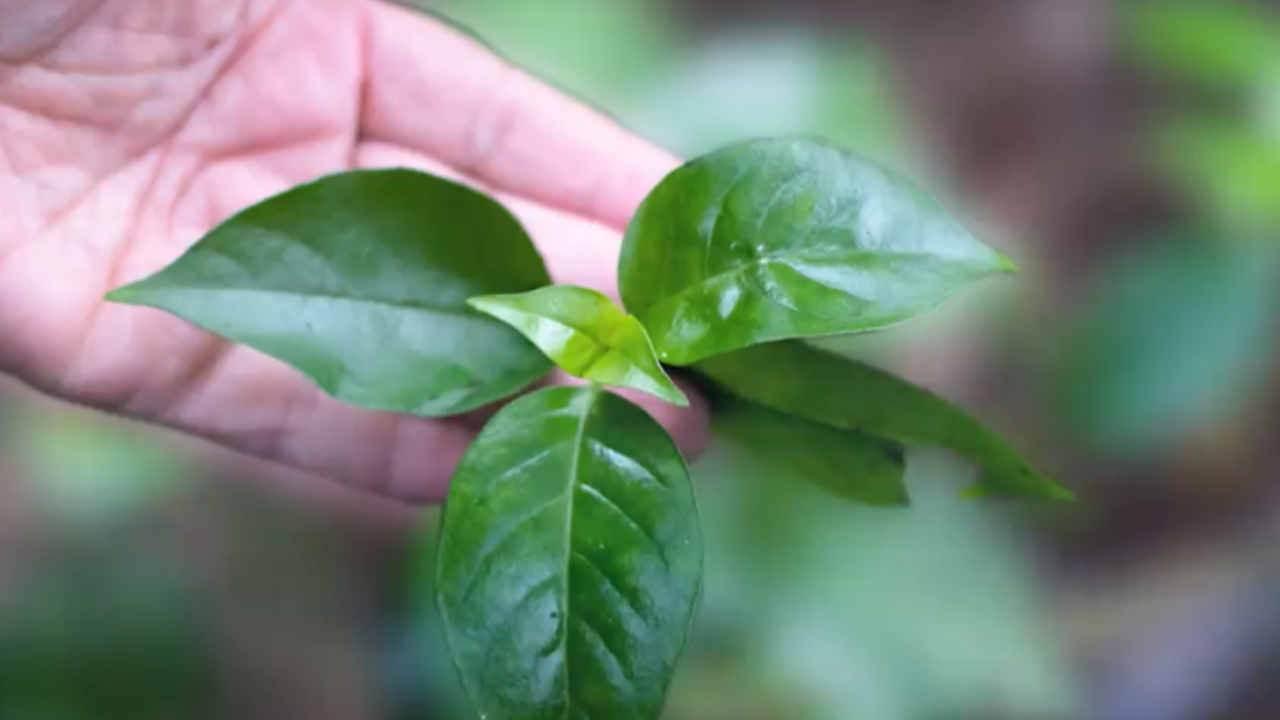
Listening to the Language of the Taiao: How Indigenous Understand Plant Communication
In a Māori worldview, plants are not passive objects growing silently in the landscape. They are living relatives within a vast genealogical network that links sky, earth, ocean, forest, birds, insects, animals and people. Through whakapapa (genealogy), plants, like people, descend from Papatūānuku, our Earth Mother and therefore exist as kin rather than resources. Because of this relationship, we understand the ngahere (forest) as a community of beings constantly communicating with each other and with the wider world.
To those who learn to observe carefully, the taiao (natural world) speaks very clearly.
Plants Co-operate and Support Each Other
In the taiao, plants live in community and rarely exist in isolation. Like whānau, they support one another. Forest plants can feed each other, share resources, help younger plants establish themselves and brace larger trees into their old age.
For example, karamu is a fast-growing shrub that often grows ahead of slower species. Its scruffy canopy provides dappled light that protects young kawakawa seedlings from harsh sun and wind. Without protection like this, kawakawa can struggle to establish itself in the harsh sun. In this way, karamu acts like an older sibling, creating conditions that allow kawakawa to thrive. Rata vines also help brace the larger trees well into their old age to help maintain the forest canopy.
Large forest trees also share water and nutrients through their root systems and underground fungal networks. Kauri, one of the great rangatira of the forest, is known to exchange nutrients with surrounding trees through these connections. Modern science has begun to describe these fungal networks as a “wood-wide web,” but Indigenous peoples have long understood that plants cooperate and sustain one another below the surface of the soil.
Plants Recognise Kin and Competitors
Plants also recognise who they are growing alongside. When surrounded by their own kin, their behaviour changes. Roots may remain smaller and less competitive around closely related plants, while extending further when encountering unrelated species competing for resources.
This recognition mirrors human social behaviour. Just as people behave differently among close whānau than among strangers, plants adjust their growth patterns depending on who surrounds them.
Plants Adapt to Their Environment
Plants constantly respond to the presence of others and to changing environmental conditions.
Kauri provides a good example. When growing in open sunlight where there is little shelter, kauri will grow rapidly upward in order to create its own protective canopy. In the dense heart of the ngahere, where tall trees already provide shade, kauri grows more slowly because the urgency to establish shelter is no longer present.
Plants therefore “read” their environment and change their behaviour accordingly.
Reading the Physical Language of Plants
Plants communicate constantly through their physical forms and seasonal behaviours. Plants that grow naturally on the edge of the ngahere have as their core function, the task of healing land that has been disturbed by natural and human interventions, indicating to us that the plants that heal the land also have the capacity to heal people.
Lichen often grows on the western side of tōtara trunks because that side of the tree faces prevailing weather. The wood on that side tends to be denser and more exposed to wind and rain. Observing these patterns helps people orient themselves in the forest.
Seasonal changes are also announced by plants:
- Kōwhai flowering signals the coming of the warming temperatures of koanga (spring).
- Kotukutuku and tutu dropping their leaves signal the arrival of ngahuru (autumn).
- The abundance of harore (fungi) in ngahere indicates the cooler temperatures of hotoke (winter) are on the horizon and that seasonal rains are approaching.
Through careful observation, people learn to read these signals and understand the rhythms of the seasons.
Plants Offer Tohu – Signs and Messages
Plants also communicate through tohu (signs). Sometimes these signals indicate environmental changes; other times they carry deeper messages.
For instance, the sudden appearance of tataramoa (bush lawyer) in unusual places may be interpreted as a sign that someone nearby may be in need of its healing properties. For practitioners of rongoā Māori, such occurrences can serve as reminders to pay attention to the needs of people within the community.
These signs are not random. They are part of a wider language of the land that becomes clearer with observation and experience.
Communication, ‘a Wairua’
Not all communication occurs through visible signs. Through our knowledge systems, the spiritual dimension of the world — wairua — is also a pathway of communication.
Some individuals possess the gift of matakite, or second sight, allowing them to perceive messages carried through the spirit world. In certain circumstances, trees themselves may communicate guidance or insight to those able to receive it.
Stories are told of people entering the ngahere in times of great grief or distress and hearing the voices of the trees sharing messages meant to support others. These experiences reflect the belief that the ngahere itself holds knowledge and compassion for human beings.
Plants Communicate with the Wider Ecosystem
Plants do not communicate only with each other or with people; they also communicate with the wider ecosystem.
They provide nectar that sustains birds and insects so those species can raise their young and remain in the forest long enough to pollinate flowers and disperse seeds.
The flowering of kōwhai brings a surge of insect life that feeds birds and signals seasonal movements of fish and birds. Coastal plants such as toetoe and pīngao stabilise sand dunes, creating safe habitat for species such as toheroa. Even species separated by great distances can remain connected through whakapapa. Kauri and tohorā (whales) are spoken of as brothers — one of the forest and one of the ocean — reflecting deep ecological relationships between land and sea.
Animals also play roles in these networks. For example, pekapeka (native bats) pollinate plants such as Pua o te reinga (woodrose).
Trees such as tawa, mahoe and others host Pua o te reinga which lives mostly underground and uses their roots to obtain its nutrients directly from the host tree.
Pua o te reinga produce large quantities of nectar with a strong, musky scent that is especially attractive to pekapeka (short tailed bats) at night. The flowers are structured so that when a pekapeka pushes its face into the flower to drink nectar, pollen sticks to its fur pollinating the next flower and helping it to produce seed.
In return, the bat receives a valuable energy-rich nectar food source, particularly important during seasons when insects are scarce.
The relationship between pekapeka and Pua o te reinga reminds us that forests are networks of cooperation and communication. What appears at first to be a simple flower and a small bat is in fact a carefully balanced ecological conversation. The wellbeing of each species depends on the wellbeing of the whole system.
Top of Form
Bottom of Form
Birds and the Mauri of the Forest
Birds are particularly important markers of mauri, the life force of the forest. The sound of birdsong in the ngahere is often taken as a measure of ecological health.
A forest alive with birds indicates strong mauri. When birds disappear, the silence signals that something within the ecosystem has been disturbed.
Reading the Whole Landscape
One of the most important principles in Indigenous ecological knowledge is that plants are never interpreted in isolation. Rongoā practitioners (healers) read the entire landscape — the soil, water, birds, insects, plants and weather patterns together.
When this observational knowledge is combined with pūrākau (ancestral narratives), it offers guidance about how to care for the natural world.
One such story tells us that mānuka is the only plant in the ngahere that never becomes sick. For this reason, when land becomes unwell, the ash of burned mānuka may be spread across the soil as a form of healing. Even when settlers attempted to eliminate mānuka using introduced insects that caused sooty mould to form on its trunk, the plant adapted and survived, reinforcing its reputation as a resilient healer of the land.
Learning the Language of the Taiao
For Māori, learning the language of the taiao is as essential as the need for us to be able to communicate with each other. Plants, birds, soil, water and seasons all speak continuously. When people learn to listen, they gain insight into the health of ecosystems and their own responsibilities as kaitiaki — caretakers of the natural world.
Re-learning this language may be one of the most important tasks of our time. It cannot be learnt in a classroom or online. To learn the language of the taiao requires us to immerse ourselves in the taiao. If humankind is to restore balance with the earth and ensure the wellbeing of generations yet to be born, we must once again pay attention to what the ngahere is telling us. When we listen to the ngahere closely, we see that every species plays a role in sustaining the life of others.
The taiao is always speaking.
The question is, are we willing to put other things aside in order to make the time to listen.