Wellbeing is not the absence of disease but connection.
Dec 19, 2025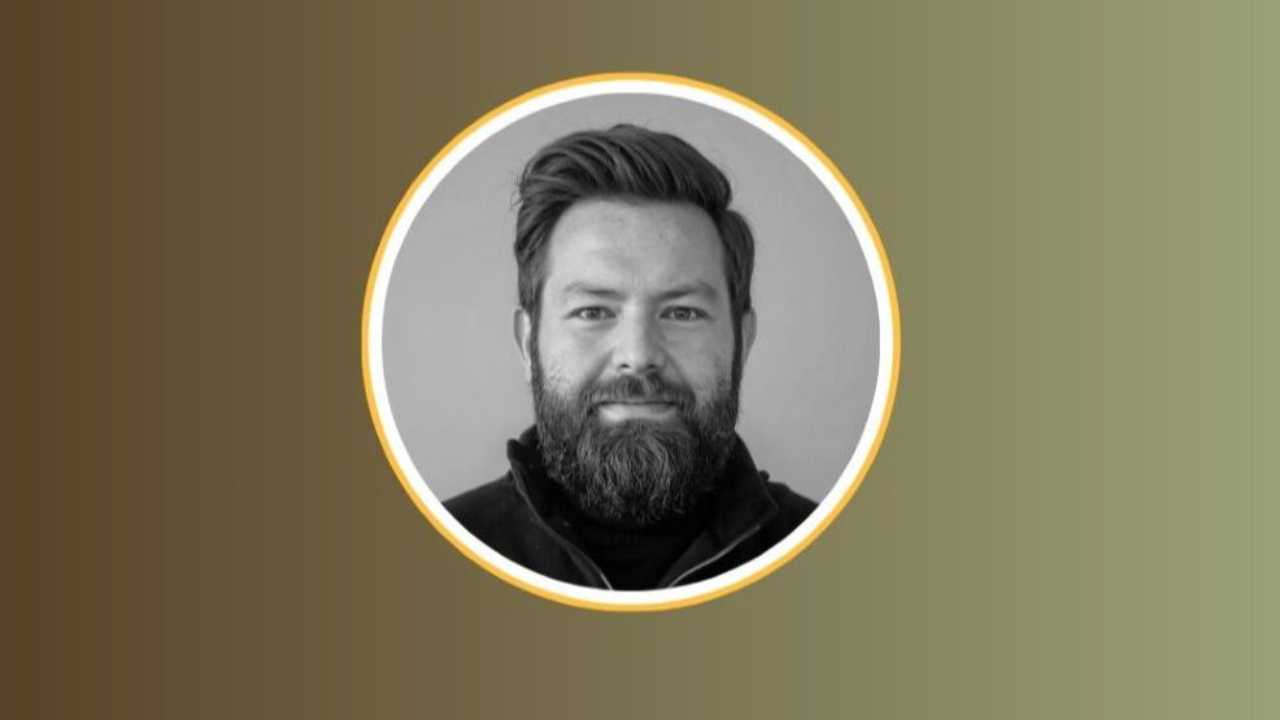
Connection is as imperative as food and water to health and wellbeing. Disconnection from each other, the land we live upon, our culture and our stories is the root of our generation’s dis-ease in the world.
If you can feel it, you can heal it.
This piece is written by Robert L Arnold and presented at the State of the World Forum December 2025. I love it!
“There is a story modern civilization tells itself, and it is a story of ascent. We rose from the soil and learned to stand upright, learned to reason, learn to dominate our environment, and in doing so, became fully human. The past is cast as primitive, and the future is framed as escape. Nature is something we've survived, not something we belong to. This story comforts us and it justifies our excess. It frames destruction as collateral rather than consequence, but it is not true, or at least, not complete, and what it leaves out has cost us dearly. For most of human existence, survival depended on intimacy. To live was to know the land not abstractly, but bodily. Wind patterns mattered. Soil mattered, water mattered. Migration followed seasons and not borders. Life was not divided into sacred and secular, because everything carried weight. A successful hunt was not only sustenance, it was relationship. Death was not failure, it was transformation among the people of Southern Africa. The Earth was not passive ground beneath your feet, but a living field of memory and footprints were read as stories. Movement itself was a language shared between human and land among the Aboriginal Australians, the dreaming did not describe a distant mythic past, but an ongoing present, and the land itself was alive with ancestral presence, and to walk it carelessly was to wound history itself. These cultures were not naive. They were precise. Their spiritual frameworks were not escapism. They were ecological literacy encoded as meaning, and the break began when surplus appeared.
Agriculture had allowed storage. Storage allowed accumulation. Accumulation allowed hierarchy. And hierarchy demanded justification, and that justification produced cosmologies that elevated some above others, humans above animals, men above women, rulers above the ruled, and eventually the civilized above savages.
Land then ceased to be our kin and became property. An empire formalized its rupture. Roman roads did not merely connect cities. They carved dominance into the earth. Forests fell not because they were needed, but because conquest demanded visibility and control. Rivers were redirected, mountains were mined and life was reorganized around extraction, rather than reciprocity.
Religion, too changed shape. Spiritualities emphasized balance and cycles and humility. But as Empire grew, so did the need for divine endorsement, and Gods ascended into the sky. The Earth was demoted. Dominion replaced stewardship, and creation became something given rather than something shared. This is an indictment of faith itself, but of how faith has been bent to serve power. The Enlightenment sharpened the separation further, and reason was elevated as defining human trait.
Descartes split mind from body, subject from object, the world became something to analyse, dissect and master. This produced extraordinary advances, but it also introduced a fatal abstraction, that man stood outside the world, looking in. And Jean Jacques Rousseau sensed the danger, and his natural man was a call not to abandon civilization, but a warning about what happens when social complexity outruns moral grounding. Civilization, he argued, did not automatically produce virtue. In fact, it often produced alienation and a condition where humans were surrounded by others and yet profoundly alone.
And when Henry David Thoreau retreated to Walden Pond, it was not to escape responsibility. He went there to remember it. He stripped life down to the essentials, not because simplicity was purity, but because excess had become a form of forgetting. Walden Pond was an act of resistance against a society that had mistaken motion for meaning. And even still, the machinery accelerated and industrialization completed that transformation. Work became divorced from outcome. Food became unrecognizable. Time became segmented. Human beings became units of labour. Nature became resource.
Distance grew from soil and from consequence from one another. Today, we live inside those abstractions. We eat food grown by people we never see on land we will never touch. We drink water from pipes whose sources we cannot name, and we experience seasons through the screens on our phones, and we mourn ecosystems through headlines.
The psychological toll of this disconnection is now impossible to ignore, because loneliness is not a personal failure, it's a structural outcome. Anxiety is not individual weakness. It is the nervous system reacting to a world that no longer feels coherent or safe. And depression is not simply chemical imbalance. It is grief without ritual. Many of our indigenous traditions, understood grief as communal and ecological. Among the Haudenosaunee, decisions were made with the seventh generation in mind, not because of abstract ethics, but because the future was understood as alive and present, and to act without regard for what came next was not only irresponsible, it was immoral.
Albert Camus described the modern condition as absurd, the human longing for meaning confronting a silent universe. But perhaps that universe was never silent. Perhaps we simply stopped listening. Ecological grief is not separate from personal despair. They are the same wound viewed from different angles. When forests burn, something ancient inside us recoils, when species vanish, a word disappears from the human story and when the land is reduced to numbers, people are reduced to functions. We cannot solve this crisis with better branding or cleaner technology alone.
We must confront the deeper truth. The environmental collapse we face mirrors the internal collapse of meaning, belonging and humility. We do not lose the connection to nature. We lose connection to ourselves. And until we face that honestly, every solution remains incomplete. We cannot heal the planet until we admit this.
The wound is within us. We did not fall from the world. We were not cast out. We walked away quietly with pockets full of clever little tools and mouths full of new names for old things. Once the earth knew us by our footprints, and once the river recognized our thirst, once the wind spoke our childhood names and we answered without fear. We said, Thank you before taking, we said, forgive us before cutting, we said, may this be enough, and we meant it. Now, we say, this is mine,
So bless the hands that once knew how to listen, and bless the eyes that once read the sky like scripture. Bless the feet that understood the long memory of the dirt and blessed the breath that remembered it was borrowed. We've been taught the world was silent, that stone was dead, that trees were furniture waiting to happen, that water was a resource instead of a relative. So we've learned to conquer what once carried us and we've built walls where once there were songs. We built clocks and forgot that the seasons were already keeping time for us, and something in us broke, not loudly, but the way bones break under snow, the way animals go quiet before a storm.
Bless the elders that warned us. Bless the stories we were too busy to hear, bless the languages we were allowed to starve, bless the children who still feel the ache but do not yet know its name, because this loneliness that we wear like a second skin.
It's not new. It is ancient. It is a grief of forgetting who we belong to. We've tried to replace belonging with ownership, and tried to trade reverence for efficiency, tried to solve the mystery of living instead of borrowing, bowing to it. We called the earth it, and have wondered why we felt so alone. But the old prayers are still breathing in the dirt under our fingernails and in the way fire still asked for care and the way water still forgives until it can't.
May we remember that we are not above the world, but within it. May we remember that breath is a treaty. May we remember that every meal is a ceremony. May we remember that the land does not need us to save it, but it does need us to stop pretending we are not part of its body. Bless this forgetting, and not because it's good, but because it can end. Bless this moment of recognition and bless the ache that wakes us. Bless the long road back to listening and when we learn again to walk gently enough that the Earth recognizes us when we return. Thank you.”